
Shaolin is a blend of different martial arts movements and ideas, which are used to implement the most effective fighting techniques. Although the art of Shaolin evolved with Shaolin Temple Boxing at its core, this art form has also absorbed some teachings from Jiu-Jitsu, Kung Fu, Kempo, Karate, and Chin Na.
Shaolin Temple Boxing
Our modern form of Shaolin has evolved from Shaolin Temple Boxing, which began its evolution in the sixth century.
History
The first Shaolin Temple was built in 495 C.E. on a central peak of Mount Song, a sacred mountain in China. The temple was located in an area with many young trees. “Hsiao” meant small, and “lin” meant forest, so the practice was named “Shao Lin.” Shao Lin was originally a place for Buddhist monks to meditate together.
In the sixth century, a Buddhist monk named Buddharama (also known as Da Mo) is credited for visiting Shao Lin and teaching meditation and fighting methods based on various animal examples. He first focused on breathing techniques to calm and strengthen the student’s minds. Then, he taught movements for self-defense. Over time these movements were perfected and became known as the powerful fighting forms of Shaolin Temple Boxing.
Although Shaolin Temple Boxing has changed over time, its core values are still present.
- It promotes a balance between the mind, body, and spirit.
- It advocates for overall health and wisdom by developing strong internal energy in the mind, and strong bones, muscles, tendons, and ligaments in the body.
- It is known for its powerful kicking and punching techniques and fluid, circular movements. However, these circular movements often need more than one strike and could lead to wasted motions and openings for the opponent to counter-attack.
Every system of fighting has its drawbacks, which is why the Shaolin taught in our school combines the ideas and movements of Temple Boxing with Karate and Kempo.
Karate
Karate is comprised of simple, angular movements that are completed quickly. It focuses on external strength, which leads to fewer (and often more powerful) motions to reach a goal quickly and succinctly. However, there are few motions to use, and they are often very mechanical, which leaves the form too rigid to stand alone as a style of fighting.
Kempo
Kempo is a mix of Karate and Shaolin. It is a mix of hard and soft motions that come together to effectively combine the powerful movements of Karate with the grace of Shaolin. However, the moves are not very sophisticated, and they lack the footwork of Shaolin and the intensity of Karate.
These Karate and Kempo styles use a crouched stance, which is sufficient for their practices, but we use an upright fighting stance instead. This upright stance is more natural for our modern bodies, and it creates more fluency and freedom while we move around.
Teaching Shaolin
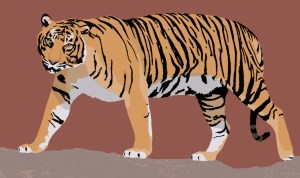
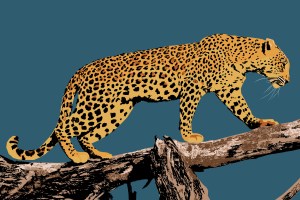
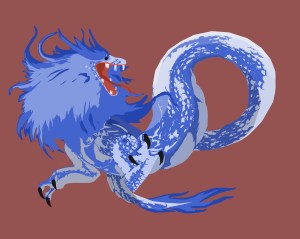
Twelve branches of Shaolin originated from China. Many of these have evolved from the guidance of animal movements. We focus on five main animals: tiger, crane, leopard, snake, and dragon, and add animal influences as you progress through the belts.
Tiger
- Strength to persevere through your challenges and reach your goals.
- This strength is not necessarily physical. It’s also the ability to push yourself further and never give up.
Crane
- Motion is graceful, fluent, and refined.
- The body is in balance and harmony while both stationary and in motion.

Leopard
- Movements are executed swiftly.
- Actions are powerful and use the force that is needed at the moment.
Snake
- The body is flexible and adaptable to changing circumstances.
- Motion and thought are precise and exact both physically and mentally.

Dragon
- The mind is driven to reach a goal and will not stop in the pursuit of that challenge.
- The spirit is unable to be beaten and always brings its best to every day.
In addition to these animals, we teach Shaolin through the use of weaponry in both offensive and defensive situations.
We also focus on the Eleven Hands of Buddha, which is a system of defending yourself through blocking.
- Hard Blocking
- Soft Blocking
- Deflecting
- Trapping
- Pushing/Pulling
- Stopping
- Slipping
- Cutting
- Dragon
- Pressing
- Scissor
Once you have mastered these eleven moves, it is difficult for another person to defend themselves against you. In the past, a monk could not graduate from a Shaolin Temple until they mastered all Eleven Hands of Buddha.
These lessons do not only focus on external, physical skills.
We also teach Shaolin by examining the relationship of the body, mind, and spirit, as well as with the teachings of Chi Kung (or Qi Gong). Chi Kung is a way to cultivate energy or vitality. Chi Kung means “life energy cultivation” and is a system of breath, posture (either quiet stationary postures or gentle moving postures), and focused attention that we can use for both health benefits and martial arts training. It creates balance and strengthens your chi (or qi), which means “life force energy.” It has been practiced in secret for most of its existence, but it has recently been recognized as an effective way to manage your health.
There are so many different aspects of Shaolin to learn. We look forward to working with you to explore these physical and mental skills and develop your Shaolin practice.
 Shaolin Hudson